
The Cross of San Damiano
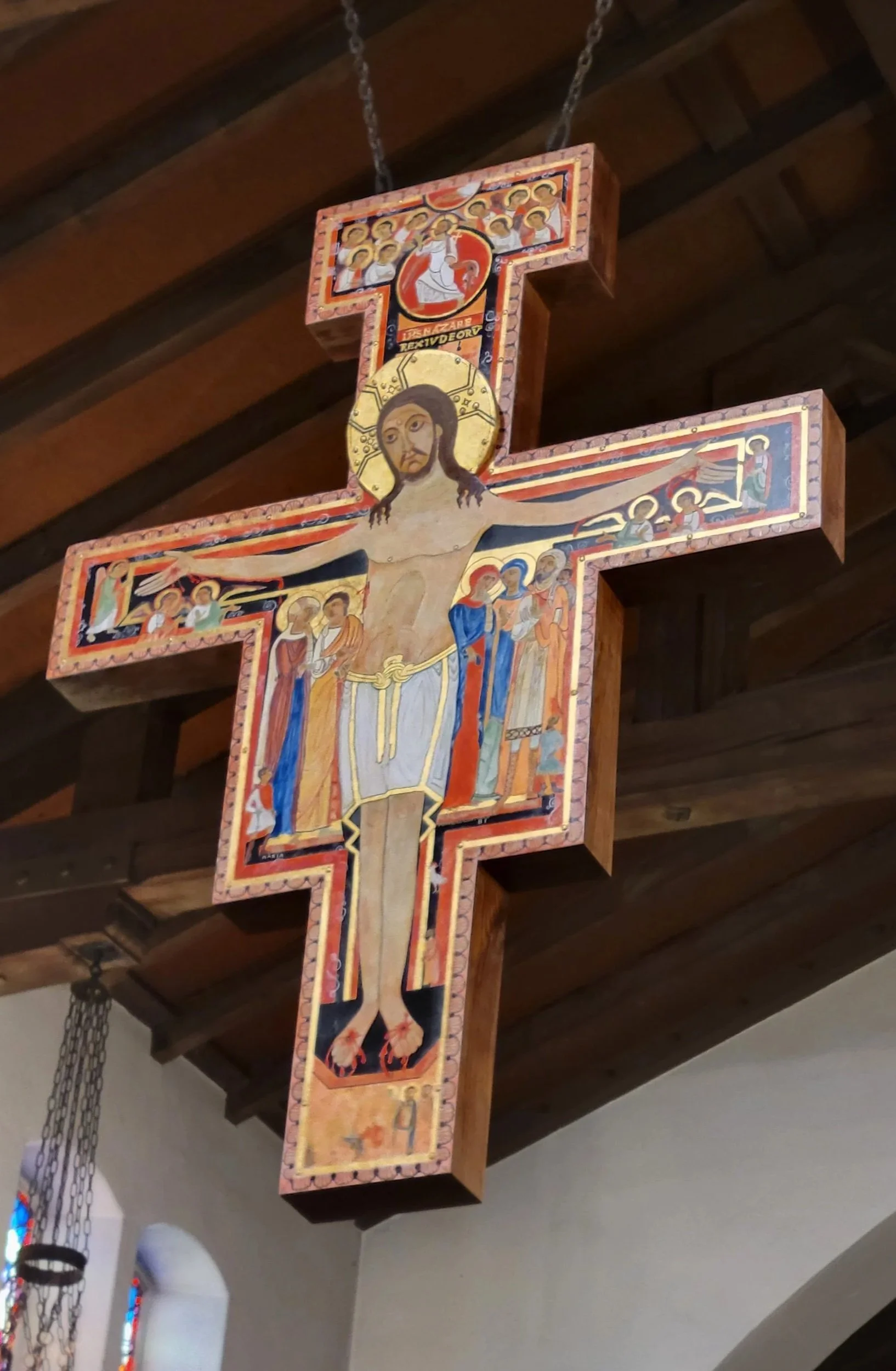
The San Damiano Cross is far more than a religious image—it is a living moment of encounter. Before this cross, Christ spoke directly to St. Francis, calling him to “rebuild my church.” At first, Francis understood these words literally, repairing the broken chapel before him. Yet over time, he came to realize that Christ was asking for something deeper: the renewal of hearts, the healing of a wounded Church, and the restoration of God’s people through love, humility, and service.
For Franciscans and Episcopalians alike, the San Damiano Cross reveals a Christ who is not defeated by suffering, but transformed through it. This is the risen and triumphant Christ—strong, alive, and radiant—who stands upon the cross not in despair, but in victory. His outstretched arms are not merely nailed there; they are opened wide in an eternal embrace, drawing all people into God’s transforming love and inviting them to live the Gospel boldly and compassionately.
The original cross itself has a rich history. Painted around the year 1100, likely by a Syrian monk, it was discovered in the abandoned church of San Damiano near Assisi, Italy. It was here that Francis, praying in silence and humility, heard Christ’s voice call him into a life of radical obedience. Today, the original icon hangs in the Basilica of St. Clare in Assisi, continuing to speak to believers across centuries.
What makes this cross especially powerful is its message of renewal. The Christ depicted here is crowned with glory, eyes open, body upright—fully present and fully alive. This image reminds the Church that resurrection follows sacrifice, and that even in brokenness, God is actively restoring the world. Surrounding Jesus are Mary, John, Mary Magdalene, and other witnesses, symbolizing the faith community gathered around Christ—united in grief, hope, and shared mission.
The San Damiano Cross also carries deep eucharistic meaning. It points to Christ’s real presence among His people, bridging heaven and earth and reminding believers that the same Christ who died and rose again continues to dwell with them in worship and sacrament.
Every color and symbol in the icon tells a story. Black represents sin and repentance, red speaks of sacrificial love, and gold proclaims resurrection and divine glory. Angels gaze in awe at the mystery unfolding before them, while the lower portion of the cross hints at Christ’s descent into darkness—into Sheol—where He rescues souls and overcomes death itself. Behind His outstretched arms lies a dark rectangle, evoking both the empty tomb and the darkness that can never overcome the light.
Ultimately, the San Damiano Cross is not an image of suffering alone—it is a proclamation of hope. It reveals a vibrant, living Christ who continues to call His people to rebuild, renew, and restore the world. Through radical love, humble service, and faithful witness, believers are invited to participate in God’s ongoing work of grace, transformation, and resurrection.